Data systems see the world as rows and columns. A knowledge graph sees it as connections. It treats information the way people do, through relationships that have meaning. Customers link to purchases. Products link to suppliers. Events, locations, and teams all connect in ways that tell a story.

When those links come together, business efforts start to click. You can follow a customer’s journey from first touch to repeat purchase. You can see how geography affects demand or how product changes impact supply chains. Suddenly, your questions get smarter and the answers more useful.

That’s why knowledge graphs sit behind so many intelligent systems: product recommendations that feel intuitive and search engines that understand intent. They make context part of the data itself. And you don’t have to boil the ocean to get there. Start by connecting a few datasets, like customer and product info. Expand as you see results.

Key Takeaways

  • Check with circle icon

    Knowledge graphs connect enterprise data through meaningful relationships. Organizations can see the complete picture without moving data from its location.

  • Check with circle icon

    Faster time-to-insight drives competitive advantage. Organizations reduce decision-making timeframes by eliminating data integration bottlenecks.

  • Check with circle icon

    Enterprise knowledge graphs differ from graph databases by adding semantic reasoning, business logic, and data virtualization.

  • Check with circle icon

    AI and machine learning applications are more reliable when grounded in knowledge graph foundations that eliminate hallucinations.

  • Check with circle icon

    Implementation starts in weeks. The best platforms automate ontology creation and data mapping to support rapid deployment.

What Are Knowledge Graphs?

A knowledge graph is a flexible, reusable data layer used for answering complex queries. It creates connectedness with contextualized data, represented and organized in the form of graphs. Built to capture the ever-changing nature of knowledge, they easily accept new data, definitions, and requirements. An enterprise knowledge graph is simply a knowledge graph of enterprise data.

Alone, data systems are good at storing records, but bad at showing how those records relate. They can tell you what happened, but not how it connects. That’s where knowledge graphs come in.

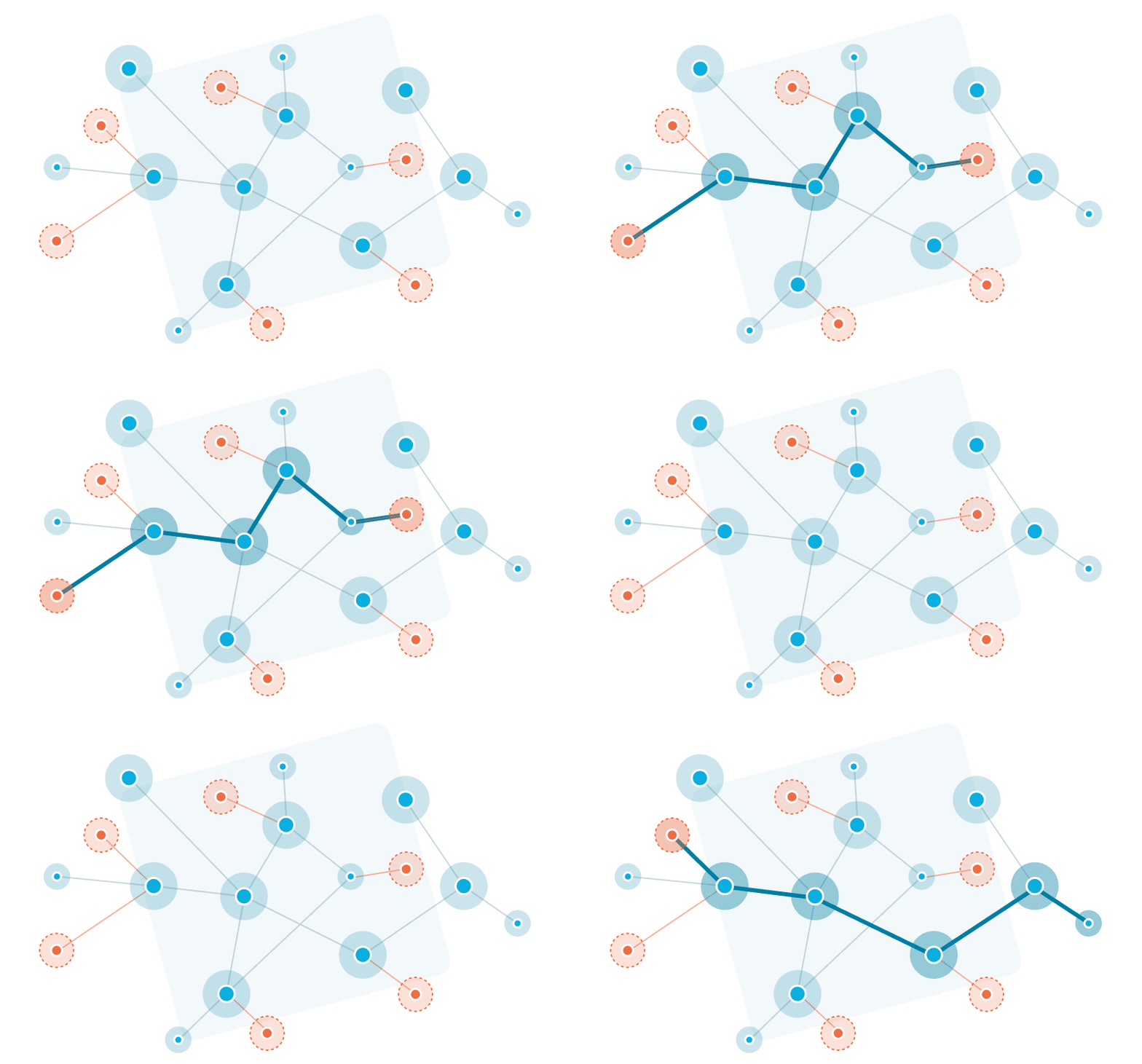
Think about how your business understands customers. A customer isn’t just a name in a CRM. They’re tied to purchases, regions, preferences, support tickets, and dozens of other touchpoints. A knowledge graph brings those connections together, building a view that looks a lot more like real life.

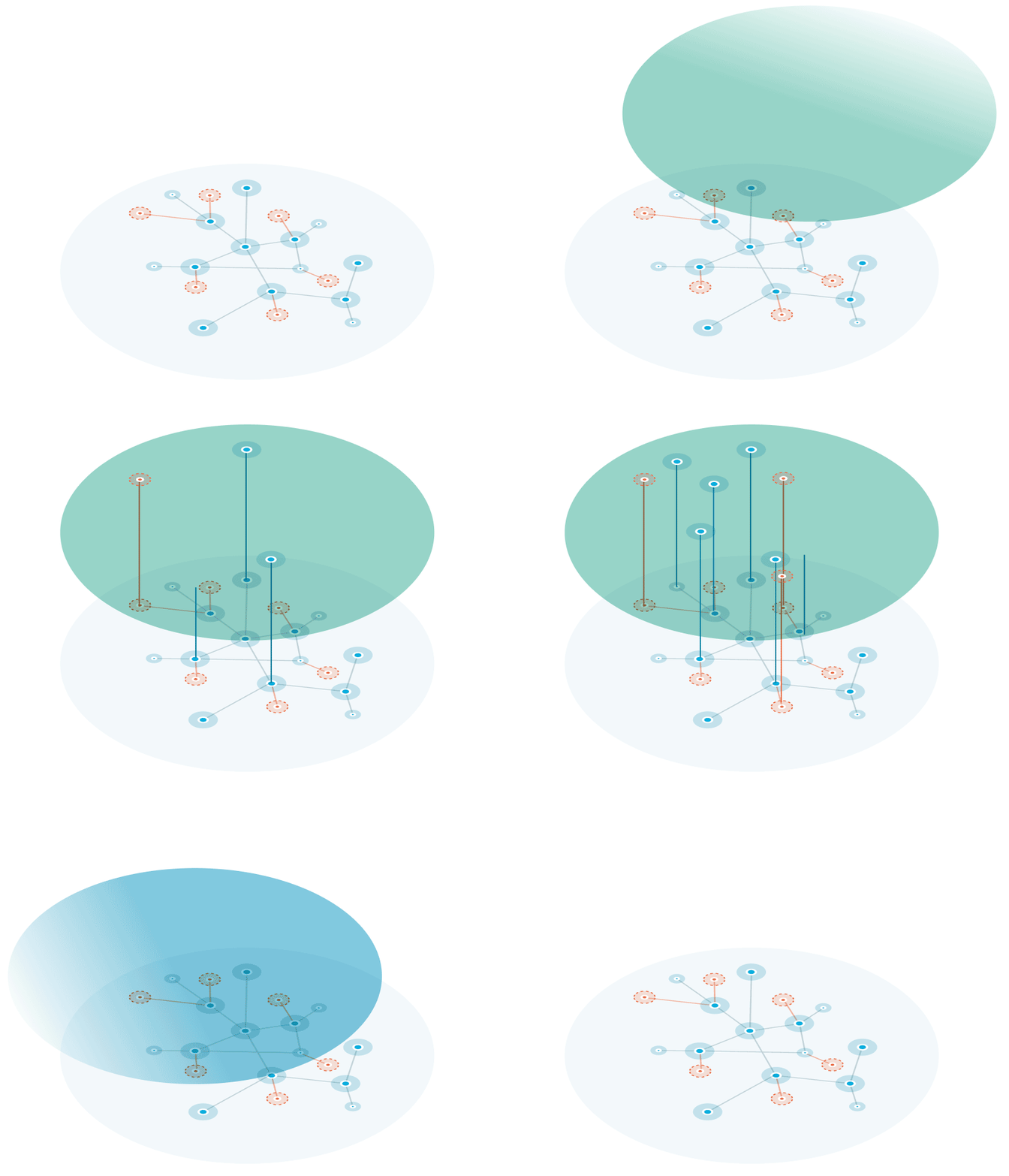
Knowledge graph tracing information

How Do Knowledge Graphs Differ From Other Data Models?

With ready access to the richest, most flexible knowledge graph-powered semantic layer, explainable AI, and reusable data modeling, data engineers and scientists can be 95% more productive. Use Stardog to create and expand semantic data models, understand any data interrelationship, and run federated queries to speed time to insight.

A different approach

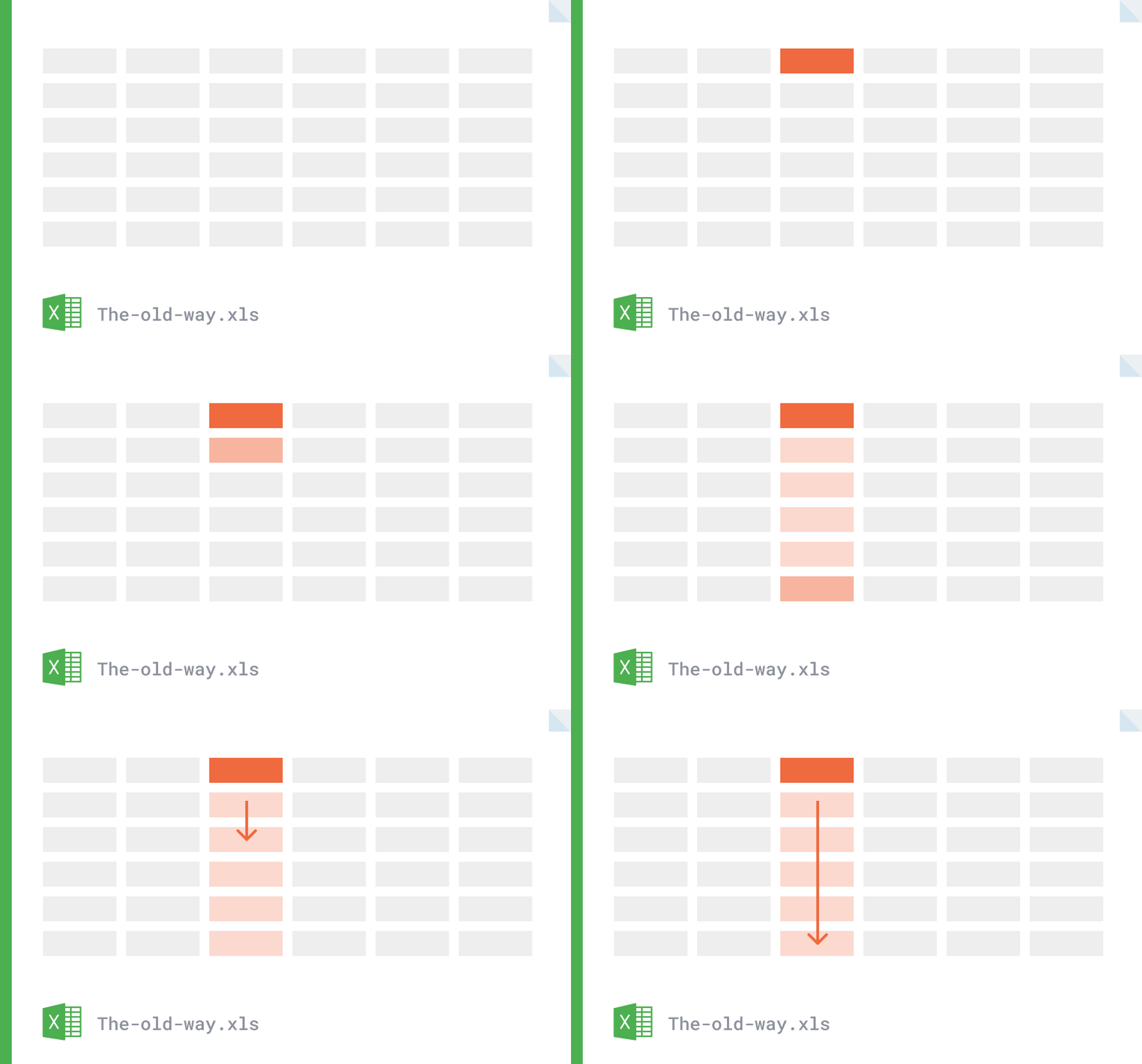
The “graph” refers to a way of structuring data that puts relationships at the center. It represents data as a network of connected points. Relational databases like Oracle or MySQL work differently. They store data in tables designed for predictable, stable business processes where the schema rarely changes.

Old Way Approach

Less rigidity

That stability creates rigidity when it comes to integration. Data integration tools built on relational systems have to permanently reshape data to make it uniform. The result is a so-called “single view” of information that looks neat on paper but limits analysis. It can’t easily capture layered or situational realities.

Merge

Highlight relationships

Knowledge graphs handle these situations naturally because relationships are priorities in the model. That flexibility is essential. When new data sources emerge or business needs evolve, knowledge graphs adapt – all without massive migrations or redesigns.

Transparent

Knowledge Graph Examples

What is a knowledge graph? You may not realize it, but you likely encounter them every day. When you search for information, the system behind the scenes does more than match keywords. It understands the relationships between people, places, organizations, products, and concepts. This is how it tells the difference between a job title, a location, or a person with the same name and why it can surface the result you are actually looking for.

Social platforms use knowledge graphs to map connections between people, interests, and industries. This helps them suggest new friends, communities, and content that fits your preferences. Recommendation engines follow a similar pattern by analyzing how thousands of signals relate so they can recommend movies, articles, and products that match your interests.

Knowledge graphs also power enterprise systems across many industries. Manufacturers connect product and lifecycle data to improve business decisions. Financial organization link entities and transactions to improve fraud and risk detection. Life sciences teams bring together research, clinical insights, and trial data to support faster drug discoveries.

Across all of these examples, knowledge graphs create context by connecting digital information to the real world and modeling how people, places, and things relate to one another.

Why Knowledge Graphs?

A knowledge graph turns your data into knowledge for machine learning. But what separates data from knowledge? Knowing this answer is key to understanding the definition of knowledge graphs. Real-world knowledge is:

Situational

meaning alters depending on circumstances

Layered

associations between concepts allow for nuanced understanding

Changing

new discoveries instantly change meanings

These facets of knowledge represent the context that is often missing from data. When traditional data management systems attempt to capture context, they fail. These failures generate gridlock over mastering data, delay timelines when adding new data sources or properties, and cause missing datasets from analyses that lead to mistrust.

Knowledge graphs, on the other hand, are purpose-built for the fluctuating nature of knowledge. They offer a more flexible foundation for digital operations by easily accepting new data, new definitions, and new requirements.

Based on Graph image

Breaking Down Data Silos

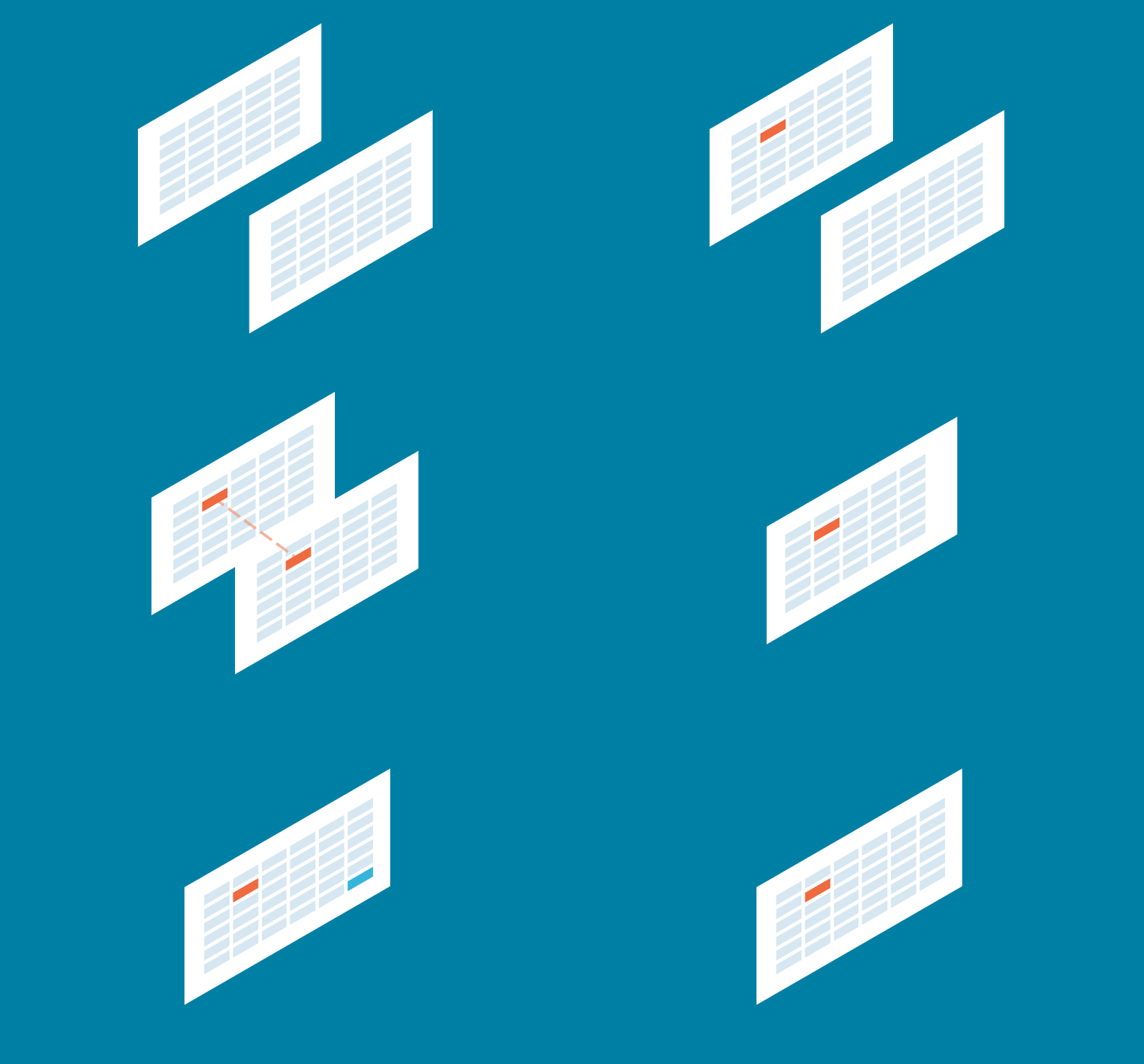
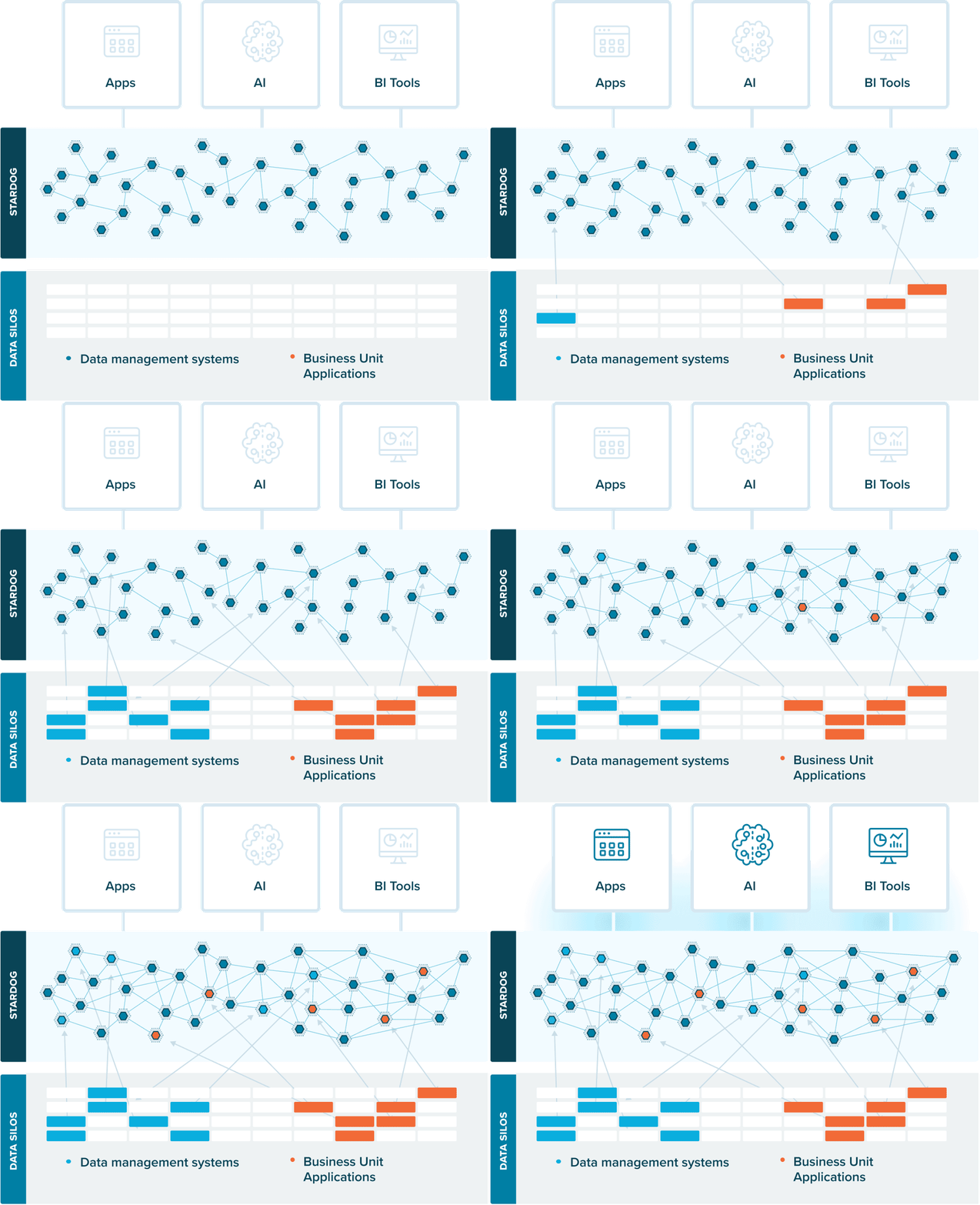
Enterprise business decisions depend on information in different systems that don’t talk. Sales sits in one platform, support in another. Product usage lives elsewhere. Teams export, transform, reconcile, and hope nothing important gets lost.

Knowledge graphs cut through this. They keep each source as it is, then link what belongs together: a customer to purchases, support cases, regions, and preferences. This is the case no matter where that data lives.

Based on Graph image

Flexibility and Scalability

Knowledge graphs are built to adapt. You add sources that define entities and how they relate to one another. When definitions shift, you adjust relationships and have knowledge representation faster.

This matters for AI and machine learning. Graphs expose relationships that make recommendations smarter and organic search results more precise. Scale follows. Mature deployments can support use cases that overwhelm traditional stacks (think: real-time fraud across complex networks or supply-chain optimization across thousands of partners).

How Knowledge Graphs Work

Knowledge graphs operate with four technical components. Understanding these building blocks helps explain why knowledge graphs can solve complex data challenges that defeat traditional approaches.

Based on Graph Databases

Graph’s flexibility alone is not enough to turn data into knowledge. Graph databases — a common use of graph — can accept new data more easily than relational databases, but functionality is limited by its single schema. A graph database imposes one point of view of the world and requires that business logic be coded into the application directly, whereas the low-code Knowledge Graph stores logic centrally. Learn how to build a knowledge graph.

Based on Graph image

Implemented Ontologies and Semantics

Ontologies define domain knowledge, including definitions, relationships, and rules. A knowledge graph acquires and integrates data into an ontology (or many) and then makes that knowledge available to enterprise applications..

implemented ontology

Data Integration Across Formats

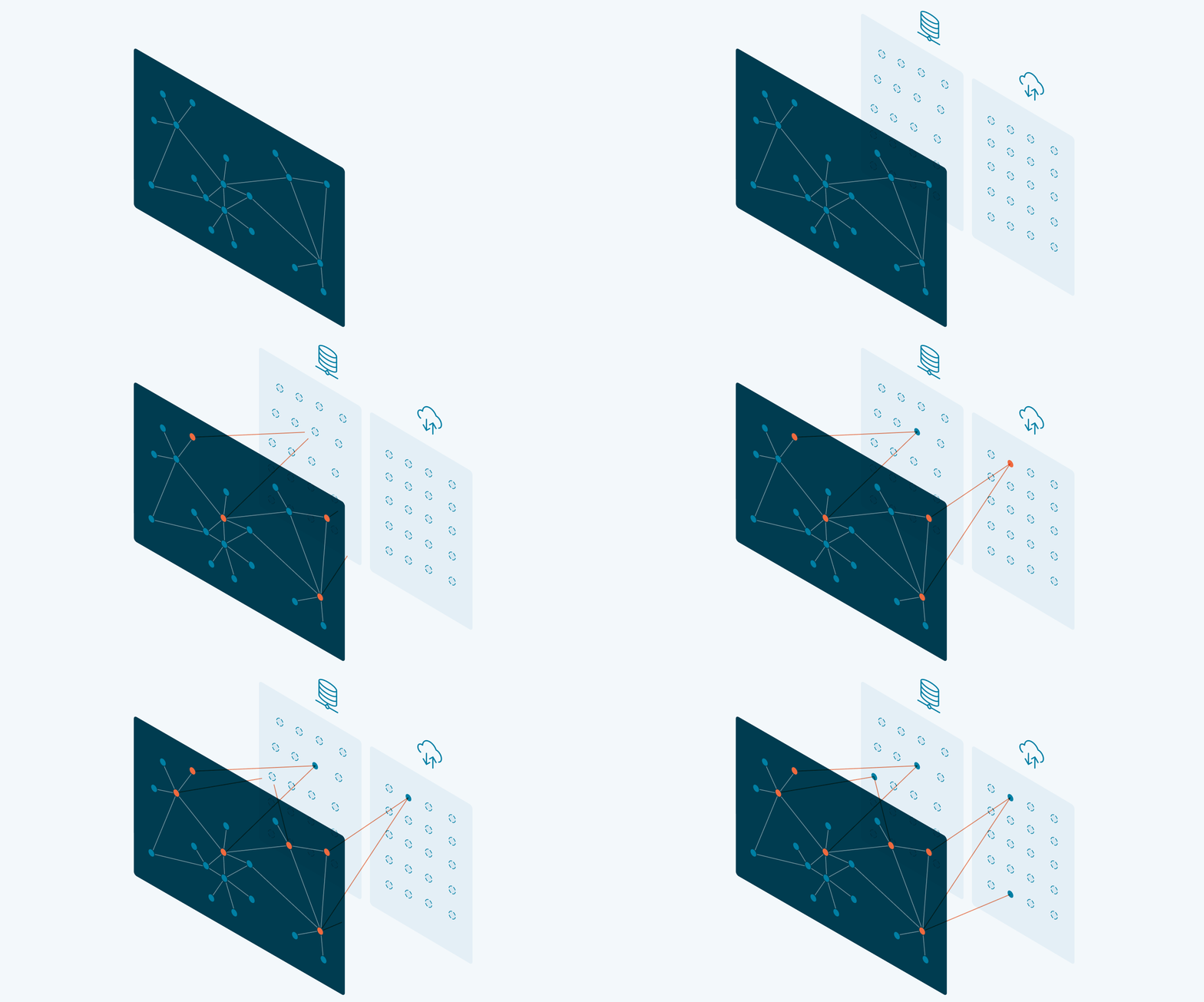
Knowledge graphs fit the messy reality of enterprise data, where information lives in different formats. Graph platforms use virtualization to reach data where it already lives. When you query the graph for a customer, for example, it can pull details from a CRM or unstructured text like emails or support transcripts. The graph presents this as a single, connected view.

That design brings major technical benefits. Companies avoid the cost and maintenance burden of data replication and gain real-time visibility into the latest information. As source systems update, the knowledge graph updates automatically.

Limitless Image

AI & Knowledge Graph LLM Enhancements

Knowledge graphs are more powerful when paired with artificial intelligence and large language models. AI struggles with accuracy, hallucinating factual information or missing context. A knowledge graph fixes that by grounding AI in structured, verified relationships.

The connection runs both ways. Knowledge graphs feed AI with rich, relationship-aware data that sharpens insights and keeps outputs on track. At the same time, AI can help build and maintain those graphs.

AI Image

Benefits of Knowledge Graphs

Launch Faster, Iterate Easily

Stardog’s flexible data model and low-code platform mean easier updates — making you more responsive to market opportunities and customer needs.

Agile Data-Driven Operations

Translate and automate even the most complex business processes, saving time and money by replacing laborious manual analyses and procedures.

More Accurate Results

With real-world context captured in your data, analytics are higher-quality and search results are more relevant. Empower employees to make better decisions with unified data.

Reduce Integration Costs

Organizations report reducing data integration costs by eliminating the need for complex ETL processes and data replication.

Supporting NASA's deep space missions
Driving faster research through Stardog
Accelerating the fight against infectious diseases
SpringerMaterials Accelerates Research With Semantic Search

Case Study

Supporting NASA's deep space missions

NASA faces typical systems engineering hurdles; myriad divisions and contractors working across several disciplines require specialized cuts of data from complex datasets. Stardog provides needed data in a fraction of the time to support mission-critical decisions.

Read Case Study

Case Study

Driving faster research through Stardog

Boehringer Ingelheim used Stardog to connect data across the company, improving research efficiency, accelerating drug discovery and enabling bioinformaticians and analysts to quickly access the full body of institutional knowledge.

Read Case Study

Case Study

Accelerating the fight against infectious diseases

Stardog powers the MIDAS digital catalog of predictive epidemiological models of infectious diseases. When outbreaks occur, scientists can search a wide range of disease models, scientific research, and population data to quickly find the resources needed to halt the disease's spread.

Read Case Study

Case Study

SpringerMaterials Accelerates Research With Semantic Search

Springer Nature transformed their rich publication history into a new digital product, SpringerMaterials, using a Knowledge Graph. Learn how SpringerMaterials helps materials scientists conduct more effective research by providing fewer, more relevant results.

Read Case Study

Explore how LLMs and knowledge graphs enable trustworthy AI agents.

Based on Graph image

Enhancing LLMs With Knowledge Graphs

Large language models change how organizations work with data and automation. But they’re great at language, not logic. Knowledge graphs fill that gap by grounding AI in structured, verified relationships.

Property Graph vs. RDF Graph

LLMs trained on web-scale text can sound confident but get facts wrong or miss relevance. A knowledge graph gives them something they’ve been missing: a trusted data foundation built on real relationships and rules. When an LLM is connected to a knowledge graph, it can reference your organization’s data. This way, it can reason with the right context.

Case Study

Knowledge Graphs and Natural Language Processing

In enterprise settings, the same term can mean different things depending on the department, system, or document. Knowledge graphs resolve that ambiguity by using context to determine meaning. It also enables deeper, cross-domain data reasoning. For example, the graph can connect suppliers, divisions and delivery timelines. This allows the NLP system to build a query and return a complete, evidence-based answer.

Case Study
Based on Graph image

Agentic AI and Knowledge Graphs

Agentic AI systems take actions and adapt as conditions change without someone nudging every step. In the enterprise, that only works when the agent understands context and constraints. Knowledge graphs provide that foundation.

Why Agentic AI Needs Knowledge Graphs

Autonomous agents can make fast, confident choices that don’t fit the business if they lack context. A knowledge graph supplies current, governed information about entities and rules so agents choose actions that align with objectives and access boundaries.

How Agentic AI and Knowledge Graphs Work Together

Agents consult the graph to understand the state of the business and plan multi-step work. When something changes, the graph reflects it, and the agent adapts. This moves automation forward.

Knowledge Graphs for RAG

RAG improves LLM output by pulling in outside context. A knowledge graph makes retrieval relationship-aware, so responses reflect entities, processes, and policies. That’s how you move from “found the file” to “understood the situation.”

RAG vs. Agentic AI + Knowledge Graphs

RAG is reactive: you ask, it retrieves, the model answers. Agentic AI with a knowledge graph is proactive. Think of the difference between answering “What’s this customer’s status?” and detecting churn risk, tracing the drivers across products and tickets, and kicking off the retention play. The knowledge graph supplies the business intelligence and governance that make that autonomy safe and useful.

Graph Database vs. Enterprise Knowledge Graph

A graph database stores and traverses connected data. An enterprise knowledge graph adds the semantic and integration layers. platform.

Property Graph vs. RDF Graph

Property graphs model entities as nodes, relationships as edges, and attach attributes to both. This feels intuitive and performs well for traversals and exploratory queries. The tradeoff is that vendor implementations differ.

Knowledge for Enterprise Data Management

A graph database answers graph queries. An enterprise knowledge graph platform goes further: it manages ontologies (shared vocabularies and rules), runs inference to derive new facts, and virtualizes access to data in place.

Relational silos and graph silos

Replacing one silo with another doesn’t help. A standalone graph database that holds only a slice of enterprise truth still forces users to stitch together answers from elsewhere. And when business rules live in application code or a single rigid schema, changes are expensive. Enterprise knowledge graphs address this by treating integration as the core job.

How Knowledge Graphs Drive Enterprise Results

A graph database stores and traverses connected data. An enterprise knowledge graph adds the semantic and integration layers.

Faster Decision-Making

Graphs remove the scavenger hunt of chasing data across systems. Leaders see customers, products, policies, and history in one connected view. Time-to-insight drops because the context is already available.

Operational Efficiency

With a knowledge graph, you update business logic once and every downstream workflow benefits. Automation gets smarter, because it understands people and dependencies. Sources are all connected, so plans adapt without manual rework.

Risk Reduction

Hidden links create hidden risk. Graphs reveal the gaps that don’t show up in siloed reports. They also tie activities to the regulations and evidence that prove compliance, making audits easier and controls more reliable.

Revenue Growth

Growth follows clarity. When interactions, product usage, markets, and competitive signals live in one model, teams spot patterns earlier. You know who’s likely to churn, where upsell fits, which features open a new segment.

What makes Stardog different?

Access any data

Access the most popular SQL and NoSQL databases via our custom Connectors and extract info from unstructured sources with our NLP pipeline.

Advanced virtualization

Stardog’s patented virtualization accesses data remotely — whether its cloud or on-prem. No more copies of copies of data.

Best-in-class Inference Engine

Our Inference Engine was designed from the ground up to solve complex problems and offers full explainability so you can trust your results.

Unify data for insight

Put your unified data in the hands of more analysts with our BI/SQL Server, which easily connects to SQL-based BI platforms like Tableau and Power BI.

Reliable and scalable

Stardog’s enterprise-ready, semantic AI platform can scale up to 1 trillion triples; we’re also Kubernetes compatible and ACID-compliant.

Knowledge Graph FAQs

Get the free guide

It’s the structured backbone that helps large language models stay grounded in facts. The model can check a knowledge graph for verified relationships before answering.

They work side by side. NLP helps machines understand language. A knowledge graph gives them context. The graph turns words into entities and relationships.

No, but Google Search uses one. When you see a panel showing results with connected details, that’s Google’s Knowledge Graph at work. It helps search understand context.

A typical database stores facts. A knowledge graph database connects them. It understands how data points relate. That allows you to trace context. Think of it as adding meaning to the data you have.

No. A graph database is the engine that stores connections. A Knowledge Graph adds the business layer on top. That way, the information makes sense to people and other systems.

You can get up and running sooner than you might think. Most teams can stand up an initial use case in a few weeks. Look for a platform that handles modeling and connections automatically.

With Stardog, you don’t need to move or copy your data because the platform connects to it where it already exists through virtualization. You can query multiple sources as if they were one.

Usually the same data engineering team that manages your existing systems. A good platform will hide most of the complexity, empowering business users to explore and ask questions without writing code.

Learn how to use your existing stack with Stardog to build a knowledge graph-powered semantic layer

See how Stardog builds shared meaning and trusted context across your existing stack, connecting data from MDM, data integration, data catalogs, warehouses, and graph databases for analytics and AI enablement.